Nim vs Chomp: Which Combinatorial Game to Play?
The Verdict
Play Nim if you want a game you can genuinely master: Charles Bouton solved it completely in 1901 — XOR the heap sizes and always hand your opponent a zero. Play Chomp for the beautiful open problem: David Gale's 1974 strategy-stealing argument proves the first player wins, yet on large grids nobody knows how. Nim rewards learned technique; Chomp rewards live exploration.
Side by Side
| Nim | Chomp | |
|---|---|---|
| Players | 2 | 2 |
| Equipment | Heaps of counters (classically 3, 5 and 7) | Rectangular grid with one poisoned corner |
| Win condition | Take the last counter (normal play) | Avoid taking the poisoned square |
| Average game length | 2–5 min | 2–5 min |
| Luck vs skill | 100% skill | 100% skill |
| Solved status | Fully solved 1901 (Bouton's nim-sum) | First-player win proven (Gale, 1974); moves unknown in general |
| Misère play | Standard variant — last counter loses | Built in — the final square is the losing one |
| First appeared | Ancient folk roots; analysed and named 1901 | 1974, David Gale (equivalent to Schuh's 1952 divisor game) |
How the two games work
Nim could hardly be simpler to state: several heaps of counters sit on the table, each turn you remove any number of counters from one heap, and in normal play whoever takes the last counter wins. Chomp is played on a rectangular grid — picture a chocolate bar whose top-left square is poisoned: each turn you pick a square and eat it together with every square below and to its right, and whoever is finally forced to eat the poisoned square loses. Both are two-player, perfect-information games with no luck, and both finish inside five minutes.
Solved versus proven-but-unknown
Nim is completely solved. In 1901 Harvard's Charles Bouton proved a position is lost for the player to move exactly when its nim-sum — the XOR of the heap sizes in binary — is zero; the winning strategy is simply to restore the nim-sum to zero every turn. Chomp's status is stranger. David Gale proved in 1974 that the first player wins on any grid bigger than 1×1 by strategy-stealing: if the second player had a winning reply to the smallest possible first bite, the first player could have made that winning move directly. The proof names no moves — computers have found them for small boards, but no general rule is known.
Which should you learn first?
Start with Nim: it is the front door of combinatorial game theory, and the payoff for one evening's study is total — once you can XOR heap sizes in your head, you beat anyone who cannot. Then let Chomp humble you: knowing you should win as the first player while owning no formula for the moves is a genuinely different experience, and even 3-wide boards get hard fast. Together they bracket the whole field — one game where mathematics answers everything, one where a two-line proof answers almost nothing.
Pick Nim if…
- you want a game with a complete, learnable winning formula
- you enjoy mental binary arithmetic as a party trick
- you want the canonical entry point to combinatorial game theory
- you like playing with matchsticks, coins or any counters at hand
Pick Chomp if…
- you want a game even its inventor could not play perfectly
- you enjoy fresh puzzles over memorised technique
- you like the drama of a poisoned square closing in
- you want to feel a non-constructive proof from the inside
FAQ
What is the winning strategy in Nim?
Compute the nim-sum: write each heap size in binary and XOR them together. If the nim-sum is non-zero, a winning move always exists — remove counters so the nim-sum becomes zero, and repeat every turn. Charles Bouton published this complete solution in 1901.
Who wins Chomp with perfect play?
The first player, on any grid larger than 1×1. David Gale's strategy-stealing argument proves it: if the second player had a winning answer to the first player eating just the bottom-right square, the first player could have played that winning move themselves — a contradiction. The proof reveals no actual moves.
What is the difference between normal and misère Nim?
Normal play means taking the last counter wins; misère play means it loses. The famous match-stick game in Last Year at Marienbad is misère Nim. The optimal strategies are identical until the endgame, where misère play flips one decision about leaving heaps of size one.
Is Chomp a solved game?
Only partially. The first player is proven to win any grid bigger than 1×1, and computers have calculated exact winning moves for small boards, but no general winning strategy is known — an unusual gap between knowing who wins and knowing how.
What is a combinatorial game?
A two-player game with perfect information, no chance, and alternating moves — think Nim, Chomp, Hex or Go endgames. Nim is the family's cornerstone: the Sprague–Grundy theorem shows every impartial combinatorial game is equivalent to some Nim heap.
Are Nim and Chomp good games for children?
Excellent ones. Both teach in under a minute, run 2–5 minutes per game, and reward pattern-hunting; Nim doubles as a stealth introduction to binary numbers. A chocolate bar makes Chomp self-enforcing — eaten squares stay eaten.

MAIN MENU
PvP Games
 Battleship
 Crazy Eights
 Dots & Boxes Blitz
 Gomoku
 Ludo
Ludo Quoridor
 Snakes & Ladders
 Yahtzee
Free Games
 Alquerque
 Backgammon
 Bagh-Chal
 Balut
Balut Battle for TokyoBattleship
 Bingo
Bingo Brick Breaker
 Bridge
 Bunco
Bunco Callbreak
 Checkers
 Chess
Chess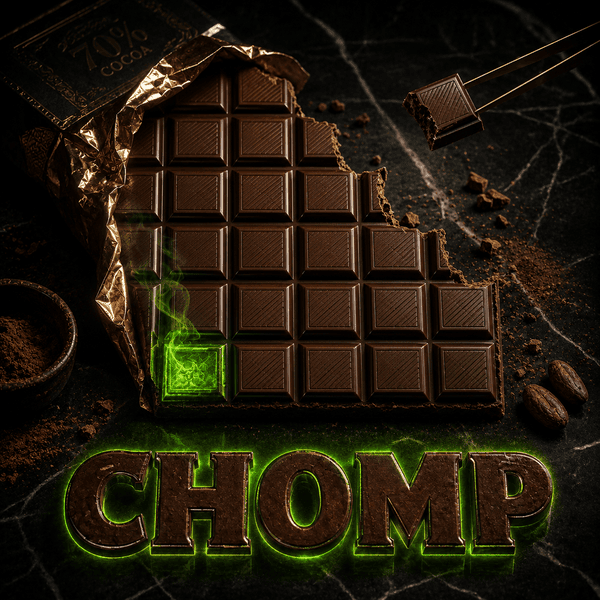 ChompCrazy Eights
 Cribbage
 Dara
Dara Derby Dash
 DominoesDots & Boxes Blitz
 Durak
Durak Emberdeep
 Euchre
 Fanorona
 Farkle
 Fox and Geese
 Fox and Hounds
 Generala
 Gin Rummy
 Go / WeiqiGomoku
 Hazard
 Hearts
 Hex
Hex Higher or Lower
 Hnefatafl
 Hounds and Jackals
 Indian Rummy
 Jungle
 Ludus Latrunculorum
 Liar's DiceLudo
 Mahjong Solitaire
 Mancala
 Minesweeper
 Nim
Nim Nine Men's Morris
 Onitama
 Patolli
 Peg Solitaire
 Pentago
 Pente
Pente Pig
Pig PylosQuoridor
 Reversi
 Royal Game of Ur
 Scratch Cards
 Seega
Seega Senet
Senet Shax
Shax Ship, Captain, Crew
 Shut the Box
 Sixteen Soldiers
 SnakeSnakes & Ladders
 Klondike Solitaire
 Space Blaster
 Spades
 Sugar Pop
 Sungka
 Tangram
 Tile Rummy
 Tower
Tower Truco
Truco War
War Word Spy
 XII ScriptaYahtzee
NEED HELP?