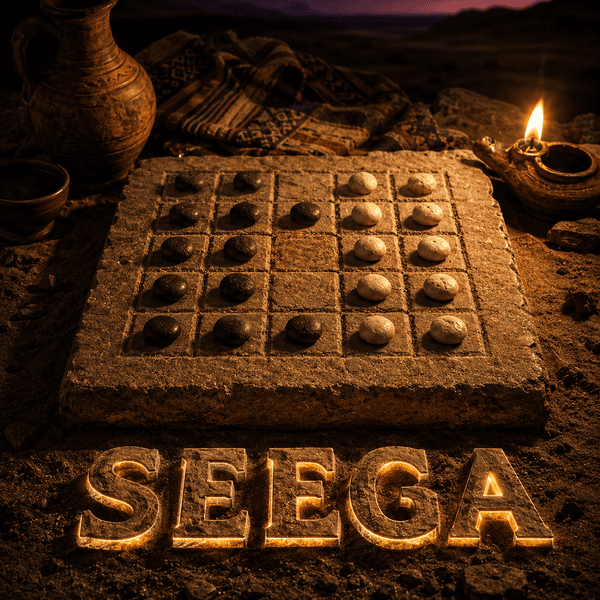
Seega - Rules, History & Strategy Guide
Seega is a two-player Egyptian strategy game on a 5×5 board, played in two phases. Players first alternate placing twelve stones each, two at a time, then move stones one square at a time and capture by trapping an enemy between two of their own. A typical game lasts ten to fifteen minutes.
Reviewed & updated
History & Origins
Seega is the board game that never left Egypt. Boards are scratched into the roof slabs of ancient temples and the pavements of Cairo, and unlike Senet, whose rules vanished with the pharaohs, seega stayed alive in the streets: 19th-century travelers like Edward Lane described villagers playing it in the sand with pebbles and potsherds, exactly as it is still played across Egypt and Sudan today.
The game belongs to the custodian-capture family that stretches from Roman latrunculi to the Norse tafl games, but seega’s signature is its double life: a placement duel followed by a movement war. Sizes vary from 5x5 (khamsawi) to 7x7 and 9x9 boards; the 5x5 game with twelve stones each is the classic form.
How to Play
Seega plays in two acts: first you and your opponent build the battlefield two stones at a time, then you fight over it one step at a time. The center square stays empty until the fighting starts, and becomes sanctuary once it does.
- Drop phase: alternate placing two stones per turn on any empty squares except the center, until all 24 stones are placed.
- Move phase: step one of your stones to an adjacent empty square along a row or column.
- Capture by custodianship: pin an enemy stone between the stone you moved and another of your stones.
- After a capture, the same stone may keep striking as long as new captures are available; you may also end the turn early.
- Win by capturing every enemy stone or leaving your opponent without a legal move.
Strategy Tips
- Treat the drop phase as the real game: cluster stones in mutually supporting pairs and claim the squares around the center.
- Scan for stone-gap-stone lines before every drop; the first move of the fight can be an instant capture.
- Use the center as a panic room for a stone under threat: nothing on the center can be taken.
- Count a chain to its end before starting it; a striker stranded deep in enemy lines is usually recaptured.
- Ahead on material, go quiet: with more stones at the 50-move limit, you win without risking a thing.
Variations
Egyptian and Sudanese play knows 5x5, 7x7 and 9x9 boards, and house rules differ on the opening move (some give the second dropper the first move, some let the first mover choose) and on whether a blocked player may demand an opening. A related Somali game, shax, keeps the drop-then-move structure but wins by forming mills instead of custodian captures.
Play Seega on Arcadia
Play Seega on Arcadia to win the drop, close the pincers, and rule the sand like a Cairo street champion.
Quick Answers
What makes Seega different from checkers?
Two things: the drop phase (you place all 24 stones before anything moves) and custodian capture (you trap a stone between two of yours rather than jumping over it).
Can a stone on the center square be captured?
No. The center is a safe haven in the move phase. It cannot be used during the drop phase, which makes the four squares around it the most valuable drops on the board.
Are chain captures mandatory?
No. After a capture the same stone may continue striking as long as fresh captures are available, but you may end your turn at any point.
Is Seega really ancient Egyptian?
The boards carved into temple roofs suggest deep roots, but historians can only firmly document seega from the 19th century onward. What is certain is that it is Egypt’s living traditional game, still played today.
Can I play Seega online for free?
Yes. Arcadia offers free Seega in your browser against an AI opponent, with the full drop phase, chain captures, and safe center — no download or account required.
How do you win a game of Seega?
There are two classic ways: capture every enemy stone, or leave your opponent with no legal move. Arcadia adds a practical third route — if the game reaches the 50-move limit, the side with more stones on the board wins, so a material lead is worth protecting quietly.
Is Seega a game of luck or skill?
Pure skill. There are no dice and nothing hidden: both players see every stone from the first drop to the last capture. Experienced players say the placement phase decides most games, because a well-built formation walks into the movement phase with captures already loaded.
How many stones do you need to play Seega?
The classic 5×5 khamsawi game uses twelve stones per player — 24 in total, filling every square except the centre by the end of the drop phase. Larger traditional boards scale the same way: a 7×7 board takes 24 stones each, again leaving only the centre square open.
What happens if you cannot move in Seega?
On Arcadia, a player with no legal move loses the game — immobilising your opponent counts as a win. Traditional village rules differ: in some Egyptian and Sudanese versions a blocked player may demand that the opponent open a path before play continues.
Can you capture stones during the placement phase?
No. Captures only begin once all 24 stones are down and the movement phase starts, which is why you can build tight clusters in complete safety. The danger arrives with the very first move of the fight — a prepared stone-gap-stone line can capture immediately.
Is Seega the same game as Senet?
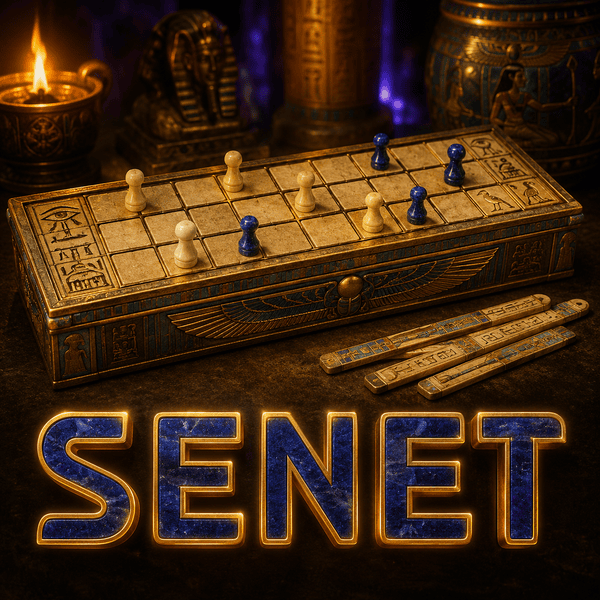
No, though the names are often confused. Senet is a race game from around 3100 BC whose original rules died with ancient Egypt and have only been reconstructed by scholars. Seega is a capture game, firmly documented from the 19th century onward and still played in Egypt and Sudan today.
What is shax and how is it related to Seega?
Shax is Somalia’s national board game and Seega’s best-known cousin: it keeps the same two-act structure of placing all pieces before any of them move. The difference is the goal — instead of trapping stones between two of yours, shax players win captures by lining three pieces up in a row, morris-style.
How long does a game of Seega take?
Ten to fifteen minutes is typical: the drop phase moves quickly at two stones per turn, and the movement war decides the rest. On Arcadia you can play free in your browser against the Scribe AI, with the full drop phase, chain captures and safe centre square included.
Related Games On Arcadia
Related Guides

MAIN MENU
PvP Games
 Battleship
 Crazy Eights
 Dots & Boxes Blitz
 Gomoku
 Ludo
Ludo Quoridor
 Snakes & Ladders
 Yahtzee
Free Games
 Alquerque
 Backgammon
 Bagh-Chal
 Balut
Balut Battle for TokyoBattleship
 Bingo
Bingo Brick Breaker
 Bridge
 Bunco
Bunco Callbreak
 Checkers
 Chess
Chess ChompCrazy Eights
 Cribbage
 Dara
Dara Derby Dash
 DominoesDots & Boxes Blitz
 Durak
Durak Emberdeep
 Euchre
 Fanorona
 Farkle
 Fox and Geese
 Fox and Hounds
 Generala
 Gin Rummy
 Go / WeiqiGomoku
 Hazard
 Hearts
 Hex
Hex Higher or Lower
 Hnefatafl
 Hounds and Jackals
 Indian Rummy
 Jungle
 Ludus Latrunculorum
 Liar's DiceLudo
 Mahjong Solitaire
 Mancala
 Minesweeper
 Nim
Nim Nine Men's Morris
 Onitama
 Patolli
 Peg Solitaire
 Pentago
 Pente
Pente Pig
Pig PylosQuoridor
 Reversi
 Royal Game of Ur
 Scratch CardsSeega
 Senet
Senet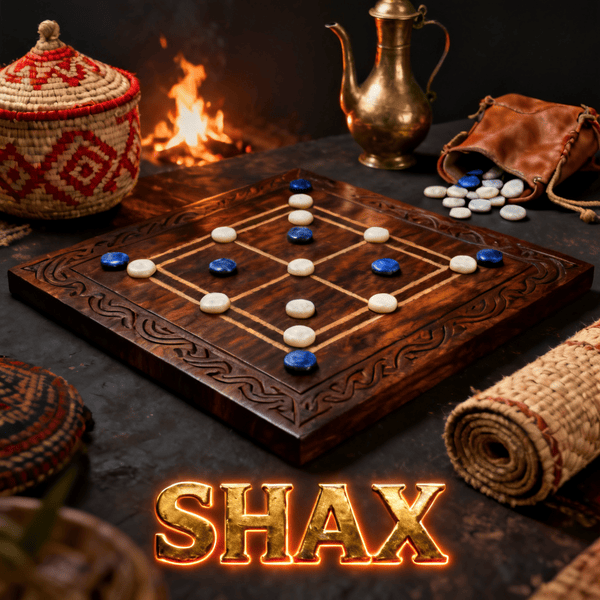 Shax
Shax Ship, Captain, Crew
 Shut the Box
 Sixteen Soldiers
 SnakeSnakes & Ladders
 Klondike Solitaire
 Space Blaster
 Spades
 Sugar Pop
 Sungka
 Tangram
 Tile Rummy
 Tower
Tower Truco
Truco War
War Word Spy
 XII ScriptaYahtzee
NEED HELP?