HAZARD
The Dice Game That Became Craps
Chaucer’s pilgrims played it; Crockford’s club was built on it
NAME YOUR MAIN
Call a main from 5 to 9 and cast two dice. Hit the main and you nick it — instant win. Throw 2 or 3 and you are out.
CHASE YOUR CHANCE
Any other throw becomes your chance. Keep casting: the chance wins, but the main you named now loses. Free chips only — medieval thrills, zero risk.
ARCADIA.
HAZARD
Seven centuries before craps, there was this table.
Stake

MAIN MENU
HomeJackpotsMultiplayerRoomsCreate RoomMy RoomPlayersLeaderboard
All Games Battleship
 Crazy Eights
 Dots & Boxes Blitz
 Gomoku
 Ludo
Ludo Quoridor
 Snakes & Ladders
 Yahtzee
 Alquerque
 Backgammon
 Bagh-Chal
 Balut
Balut Battle for TokyoBattleship
 Bingo
Bingo Brick Breaker
 Bridge
 Bunco
Bunco Callbreak
 Checkers
 Chess
Chess ChompCrazy Eights
 Cribbage
 Dara
Dara Derby Dash
 DominoesDots & Boxes Blitz
 Durak
Durak Emberdeep
 Euchre
 Fanorona
 Farkle
 Fox and Geese
 Fox and Hounds
 Generala
 Gin Rummy
 Go / WeiqiGomoku
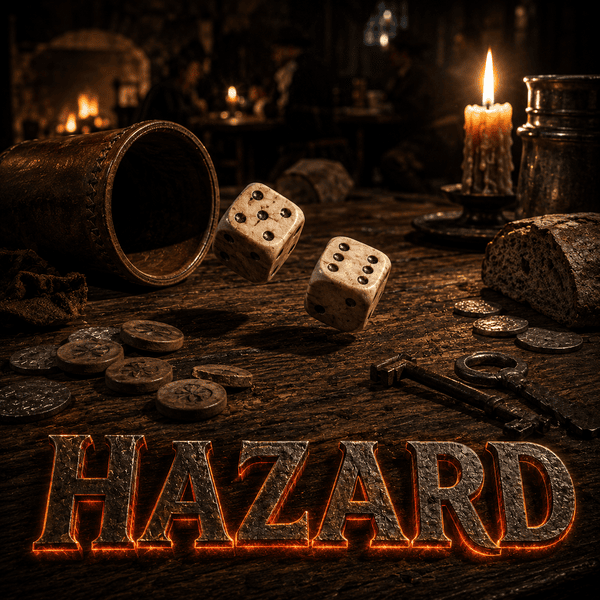 Hazard
 Hearts
 Hex
Hex Higher or Lower
 Hnefatafl
 Hounds and Jackals
 Indian Rummy
 Jungle
 Ludus Latrunculorum
 Liar's DiceLudo
 Mahjong Solitaire
 Mancala
 Minesweeper
 Nim
Nim Nine Men's Morris
 Onitama
 Patolli
 Peg Solitaire
 Pentago
 Pente
Pente Pig
Pig PylosQuoridor
 Reversi
 Royal Game of Ur
 Scratch Cards
 Seega
Seega Senet
Senet Shax
Shax Ship, Captain, Crew
 Shut the Box
 Sixteen Soldiers
 SnakeSnakes & Ladders
 Klondike Solitaire
 Space Blaster
 Spades
 Sugar Pop
 Sungka
 Tangram
 Tile Rummy
 Tower
Tower Truco
Truco War
War Word Spy
 XII ScriptaYahtzee
PvP Games
BattleshipCrazy EightsDots & Boxes BlitzGomokuLudoQuoridorSnakes & LaddersYahtzeeFree Games
AlquerqueBackgammonBagh-ChalBalutBattle for TokyoBattleshipBingoBrick BreakerBridgeBuncoCallbreakCheckersChessChompCrazy EightsCribbageDaraDerby DashDominoesDots & Boxes BlitzDurakEmberdeepEuchreFanoronaFarkleFox and GeeseFox and HoundsGeneralaGin RummyGo / WeiqiGomokuHazardHeartsHexHigher or LowerHnefataflHounds and JackalsIndian RummyJungleLudus LatrunculorumLiar's DiceLudoMahjong SolitaireMancalaMinesweeperNimNine Men's MorrisOnitamaPatolliPeg SolitairePentagoPentePigPylosQuoridorReversiRoyal Game of UrScratch CardsSeegaSenetShaxShip, Captain, CrewShut the BoxSixteen SoldiersSnakeSnakes & LaddersKlondike SolitaireSpace BlasterSpadesSugar PopSungkaTangramTile RummyTowerTrucoWarWord SpyXII ScriptaYahtzeeNEED HELP?