Battle for Tokyo - Rules, History & Strategy Guide
Battle for Tokyo is a free Stratego-style tactics game. Each side deploys a squad of units whose roles stay hidden; you move one unit per turn, and collisions resolve battles that reveal the pieces involved. Winning means completing your objective — scouting, lane control, and bluffing decide games, not dice.
Reviewed & updated
History & Origins
Battle for Tokyo is an Arcadia original in the Stratego family of hidden-information war games — a lineage that runs from the French 19th-century game L'Attaque through Stratego's worldwide editions. Every piece has a hidden role, and combat reveals information as much as it removes material.
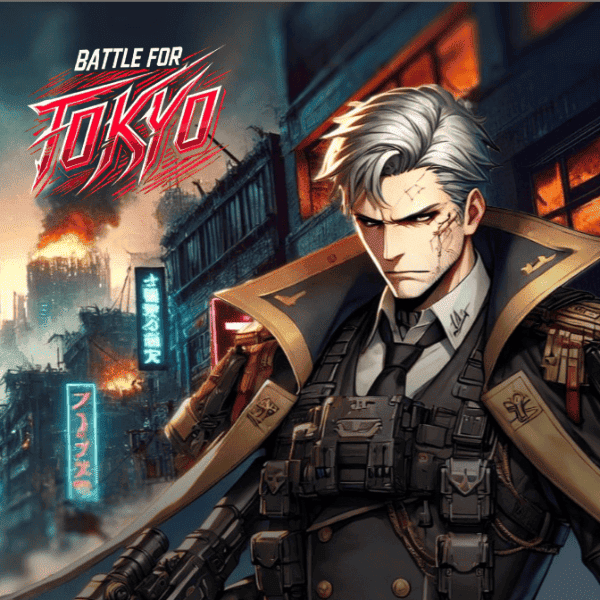
The anime-inspired Tokyo setting reframes that classic formula: instead of flags and marshals, you manage a squad of units whose strengths stay hidden until the moment of contact.
How to Play
You win by completing the objective — not by trading pieces. Every battle reveals information, so each engagement should be chosen deliberately.
- Deploy your units in your starting zone, balancing attack lanes with objective defence.
- Move one unit per turn to advance, defend, or scout.
- When units collide, the battle resolves and the pieces involved are revealed.
- Track what each reveal teaches you about the remaining hidden enemy pieces.
- Complete the objective — capture or secure the win condition — while denying your opponent theirs.
Strategy Tips
- Bait reveals with cheap units before committing your strong pieces — information is the real currency.
- Control lanes: an open path to your backline is a loss in the making, even if no piece has moved down it yet.
- Keep at least one reliable defender near your objective at all times.
- When ahead on information, simplify with clean trades instead of gambling on unknown match-ups.
Variations
The Arcadia demo focuses on the single-player ruleset: learning deployment shapes, battle resolution, and objective play against the AI. The formation you deploy is itself the biggest variant — aggressive lane rushes, balanced walls, and decoy-heavy setups all play very differently.
Play Battle for Tokyo on Arcadia
Play Battle for Tokyo on Arcadia to put these rules and ideas into practice right away.
Quick Answers
Is Battle for Tokyo the same as Stratego?
It is Stratego-inspired rather than a copy: hidden unit roles, scouting, and objective play are the shared core, but the units, board, and win conditions are Arcadia's own design.
What happens when two units collide in Battle for Tokyo?
A battle resolves and the involved pieces are revealed. The result removes the weaker piece, and — just as importantly — both players learn something permanent about the board.
How do you win Battle for Tokyo?
By completing the mode's objective — capturing or securing the win condition — not by eliminating every enemy piece. Pure trading without objective pressure is the fastest way to lose.
How does deployment work in Battle for Tokyo?
Before play begins you arrange your units inside your starting zone, and that formation shapes the whole game. Strong openings balance an attack lane with solid cover on your own objective, and keep a scout or two free to probe early.
How do you find out what the enemy pieces are?
Information comes from contact: every battle reveals the pieces involved, and cheap probing moves force your opponent to commit or retreat. Tracking what each reveal implies about the remaining hidden units is the core skill of the game.
Is Battle for Tokyo luck or skill?
There are no dice — outcomes follow deterministically from the hidden roles and your choices. The uncertainty is informational, like Stratego or poker: you win by managing what your opponent knows, not by rolling well.
What happens if you attack a stronger unit in Battle for Tokyo?
You lose the battle and the piece — and hand your opponent free information about what you were willing to risk. That is why blind attacks into unknown squares are usually worse than probing with expendable units first.
What is the best opening formation in Battle for Tokyo?
There is no single best setup, but sound formations share three traits: no unguarded lane into your backline, the objective covered by at least one reliable defender, and your strongest pieces held back until the board has context. Decoy-heavy setups punish aggressive scouts.
Is Battle for Tokyo like chess?
They are opposites in one crucial way: chess is a perfect-information game where both players see everything, while Battle for Tokyo is built on hidden information. Chess skills like lane control and piece coordination transfer, but reading and bluffing are skills chess never asks for.
Can you play Battle for Tokyo against another person?
The current Arcadia release is a single-player demo against the AI, designed for learning the ruleset and testing formations. The game is built with competitive PvP rooms in mind for future releases.
Can you play Battle for Tokyo online for free?
Yes. Battle for Tokyo is a free Arcadia original that runs in your browser with no download or account — a low-stakes way to practise deployment shapes and information play.
Related Games On Arcadia
Related Guides

MAIN MENU
PvP Games
 Battleship
 Crazy Eights
 Dots & Boxes Blitz
 Gomoku
 Ludo
Ludo Quoridor
 Snakes & Ladders
 Yahtzee
Free Games
 Alquerque
 Backgammon
 Bagh-Chal
 BalutBattle for TokyoBattleship
 Bingo
Bingo Brick Breaker
 Bridge
 Bunco
Bunco Callbreak
 Checkers
 Chess
Chess ChompCrazy Eights
 Cribbage
 Dara
Dara Derby Dash
 DominoesDots & Boxes Blitz
 Durak
Durak Emberdeep
 Euchre
 Fanorona
 Farkle
 Fox and Geese
 Fox and Hounds
 Generala
 Gin Rummy
 Go / WeiqiGomoku
 Hazard
 Hearts
 Hex
Hex Higher or Lower
 Hnefatafl
 Hounds and Jackals
 Indian Rummy
 Jungle
 Ludus Latrunculorum
 Liar's DiceLudo
 Mahjong Solitaire
 Mancala
 Minesweeper
 Nim
Nim Nine Men's Morris
 Onitama
 Patolli
 Peg Solitaire
 Pentago
 Pente
Pente Pig
Pig PylosQuoridor
 Reversi
 Royal Game of Ur
 Scratch Cards
 Seega
Seega Senet
Senet Shax
Shax Ship, Captain, Crew
 Shut the Box
 Sixteen Soldiers
 SnakeSnakes & Ladders
 Klondike Solitaire
 Space Blaster
 Spades
 Sugar Pop
 Sungka
 Tangram
 Tile Rummy
 Tower
Tower Truco
Truco War
War Word Spy
 XII ScriptaYahtzee
NEED HELP?