Dominoes vs Mahjong: Which Classic Tile Game to Play?
The Verdict
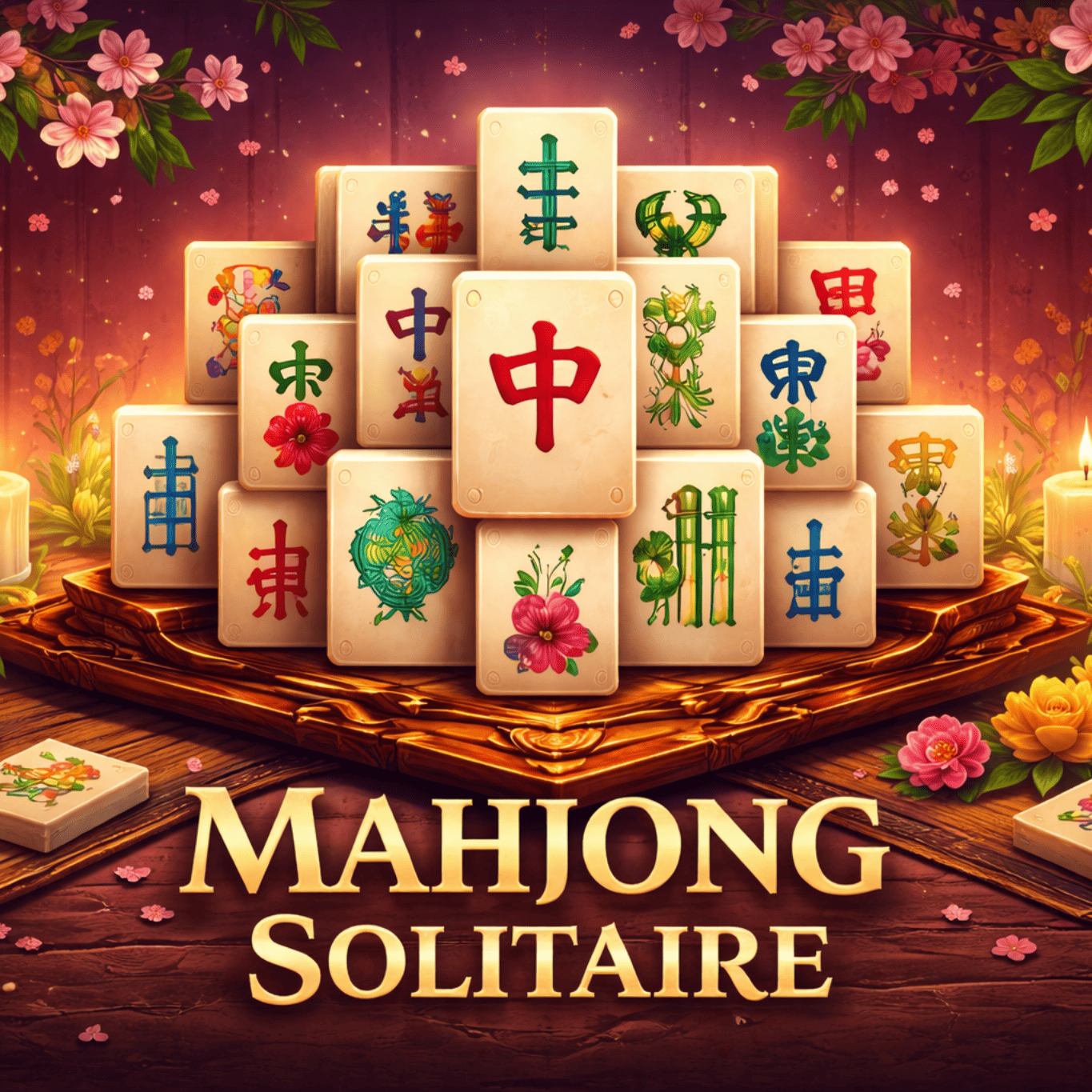
They share tiles and centuries of history, but they are opposite experiences. Dominoes is a head-to-head duel: match pips, control the board ends, and empty your hand before your opponent. Mahjong — in the online solitaire form played here — is a solo puzzle of clearing 144 tiles in the right order. Choose dominoes to beat somebody; choose mahjong to lose yourself in a layout.
Side by Side
| Dominoes | Mahjong Solitaire | |
|---|---|---|
| Players | 2 (vs AI here) | 1 (solitaire form) |
| Tiles | 28 (double-six set) | 144 |
| Average game length | ~10 min per round | 10–15 min per layout |
| Luck vs skill | Draw luck; end-control and counting matter | Layout luck; unlock order is the whole skill |
| Rules complexity | ~2 min to learn | ~1 min to learn |
| Solo play | Vs AI only | Built for it |
| Mental muscle | Counting and hand-reading | Spatial planning ahead |
| Origins | China, via 18th-c. Italy to Europe | China; solitaire form from the 1980s |
A duel versus a puzzle
Block dominoes is a fight over open ends: every tile you lay changes what your opponent can play, and hoarding the right pips can lock them out entirely. Winning means reading which numbers are exhausted and steering the board toward your hand. Mahjong solitaire has no opponent at all — the whole game is choosing which of the 144 tiles to free first, because a careless early match can bury the pair you will need twenty moves later.
Where the skill lives
In dominoes the skill is memory and inference: count the pips that have been played, notice what your opponent could not answer, and keep one end of the board friendly to your remaining tiles. In mahjong the skill is look-ahead: prefer matches that unlock stacked layers and long rows, and never clear a free pair when one of its twins is still buried. Both punish autopilot; neither needs more than a minute of rules.
Which fits your session?
Reach for dominoes when you want an opponent and a score to argue about — a round is ten minutes and revenge is instant. Reach for mahjong when you want the opposite: a quiet, self-paced clearing puzzle that ends in either a satisfying empty board or a dead end you immediately want to retry. They are the competitive and meditative ends of the same tile-game tradition.
Pick Dominoes if…
- you want a head-to-head game with a winner
- you enjoy counting and deduction
- you like quick rematches after a close loss
- you are playing with another person or the AI
Pick Mahjong Solitaire if…
- you want a solo, self-paced session
- you enjoy spatial planning more than mind-games
- you like clearing puzzles with a visible finish
- you have 10–15 quiet minutes
FAQ
Are dominoes and mahjong related?
Distantly. Both descend from Chinese tile-game traditions, and mahjong tiles were themselves influenced by Chinese dominoes. But the modern games play nothing alike: dominoes is a competitive matching duel, mahjong solitaire a single-player clearing puzzle.
Is online mahjong the same as real mahjong?
Usually not. Most online mahjong — including the version here — is mahjong solitaire: a one-player tile-matching puzzle using the same 144 tiles as the traditional four-player game, which itself plays closer to rummy.
Which game is more strategic?
Dominoes, in the head-to-head sense: you play against a thinking opponent, so counting pips and blocking ends genuinely wins games. Mahjong's strategy is real but solitary — planning unlock order against the layout rather than against a person.
How do you win block dominoes?
Empty your hand first, or — if the board locks with no legal plays — hold the lowest total pip count. Good players dump heavy tiles early and keep flexible numbers for the endgame.
Can you play both free on Arcadia?
Yes — dominoes against the AI and mahjong solitaire as a solo puzzle, both free in your browser with no download or account.

MAIN MENU
PvP Games
 Battleship
 Crazy Eights
 Dots & Boxes Blitz
 Gomoku
 Ludo
Ludo Quoridor
 Snakes & Ladders
 Yahtzee
Free Games
 Alquerque
 Backgammon
 Bagh-Chal
 Balut
Balut Battle for TokyoBattleship
 Bingo
Bingo Brick Breaker
 Bridge
 Bunco
Bunco Callbreak
 Checkers
 Chess
Chess ChompCrazy Eights
 Cribbage
 Dara
Dara Derby Dash
 DominoesDots & Boxes Blitz
 Durak
Durak Emberdeep
 Euchre
 Fanorona
 Farkle
 Fox and Geese
 Fox and Hounds
 Generala
 Gin Rummy
 Go / WeiqiGomoku
 Hazard
 Hearts
 Hex
Hex Higher or Lower
 Hnefatafl
 Hounds and Jackals
 Indian Rummy
 Jungle
 Ludus Latrunculorum
 Liar's DiceLudo
 Mahjong Solitaire
 Mancala
 Minesweeper
 Nim
Nim Nine Men's Morris
 Onitama
 Patolli
 Peg Solitaire
 Pentago
 Pente
Pente Pig
Pig PylosQuoridor
 Reversi
 Royal Game of Ur
 Scratch Cards
 Seega
Seega Senet
Senet Shax
Shax Ship, Captain, Crew
 Shut the Box
 Sixteen Soldiers
 SnakeSnakes & Ladders
 Klondike Solitaire
 Space Blaster
 Spades
 Sugar Pop
 Sungka
 Tangram
 Tile Rummy
 Tower
Tower Truco
Truco War
War Word Spy
 XII ScriptaYahtzee
NEED HELP?