Sungka vs Mancala: Seven Holes or Six?
The Verdict
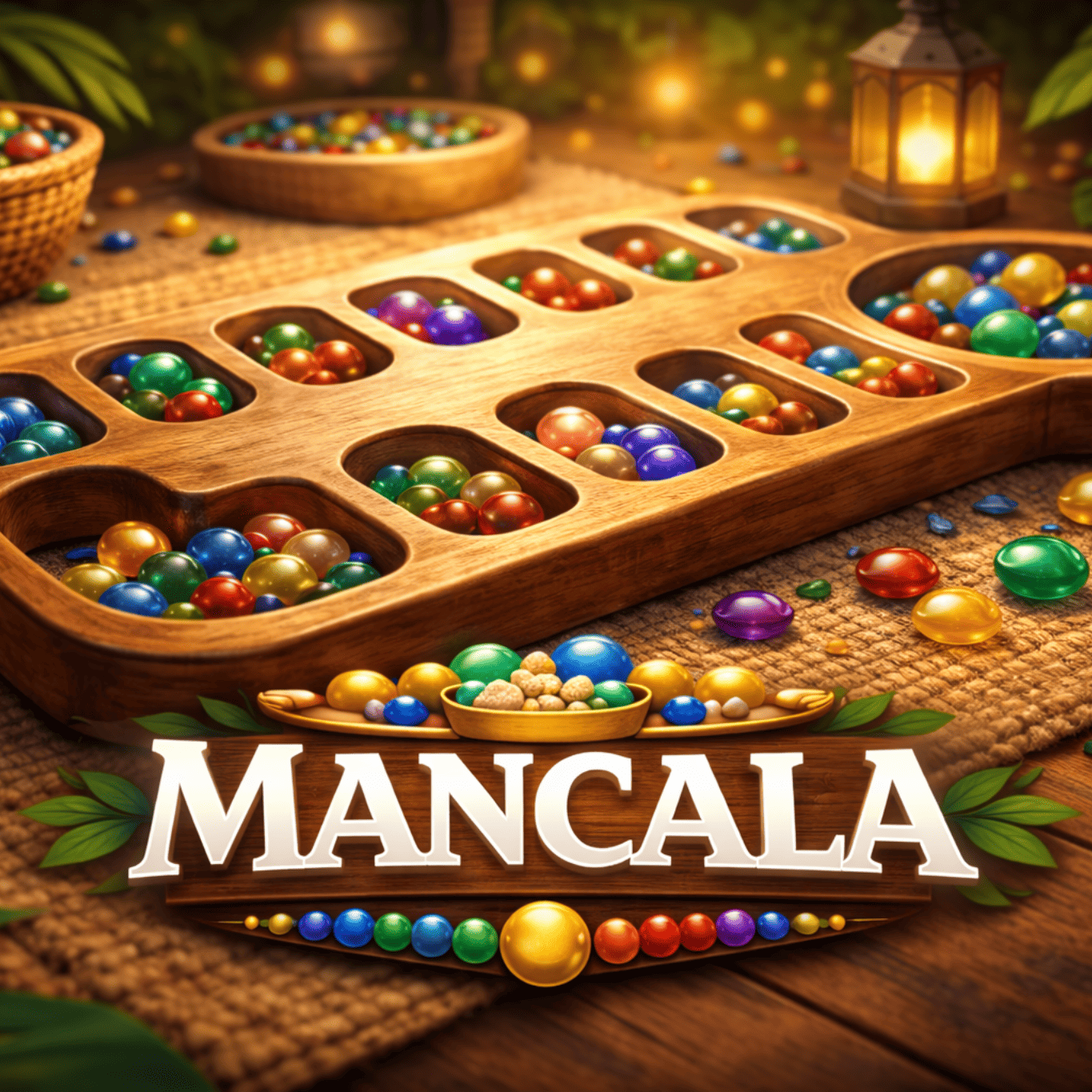
Mancala is the family name for hundreds of sowing games; Sungka is the specific Philippine one. Against the Kalah set sold in the West, Sungka uses seven holes a side instead of six and 98 seeds instead of 48, and it adds relay sowing: when your last seed lands in a hole that already had seeds, you scoop that hole up and keep going. Turns are far longer and a good opening move can cascade around the board several times.
Side by Side
| Sungka | Mancala | |
|---|---|---|
| Players | 2 | 2 |
| Holes per side | 7 | 6 |
| Seeds in play | 98 (7 per hole) | 48 (4 per pit) |
| Store | One head per player | One store per player |
| Relay sowing | Yes - the defining rule | No |
| Sow into opponent's store? | Never | Never |
| Average game length | 15-25 min | 10-15 min |
| Turn length | Long - one move can chain for ages | Short and predictable |
| Origin | Philippines | Kalah: 1940s US, from African originals |
Relay sowing is the whole difference
In Kalah-style Mancala a turn is simple: pick up a pit, drop one seed in each hole going round, stop. In Sungka, if your final seed drops into a hole that already contained seeds, you pick that whole hole up and carry on sowing. The turn only ends when the last seed lands in an empty hole or in your head. One well-chosen opening can therefore travel the board several times over, and calculating where a relay will stop is the core skill of the game - it is far more computation per move than Kalah asks for.
Why seven holes changes the counting
Seven holes with seven seeds each is not just a bigger board - it changes the arithmetic. In Kalah, four seeds in a six-hole row makes many distances easy to count in your head. Sungka's seven-and-seven means the natural cycle length no longer lines up neatly with the number of holes, so the pattern recognition you build in Mancala does not transfer cleanly. Players coming from Kalah usually find their first several Sungka games are spent recounting.
One caveat about turn order
Traditionally a Sungka game opens with both players sowing at the same time, which is part of the noise and speed of it in the Philippines. That cannot work against a computer opponent in a turn-based interface, so this version alternates turns with you moving first. Everything else - the relay, the burnt holes, sowing into your own head only - follows the normal rules.
Pick Sungka if…
- you want the deeper, more calculation-heavy sowing game
- you enjoy long turns that chain around the board
- you already know Mancala and want a real step up
- you are interested in Southeast Asian traditional games
Pick Mancala if…
- you want the quicker, simpler game
- you are new to sowing games entirely
- you prefer short, predictable turns
- you want a 10-15 minute session
FAQ
Is Sungka a type of Mancala?
Yes. Mancala is the umbrella term for the whole family of count-and-capture sowing games, and Sungka is the Philippine member of the Southeast Asian branch. Calling it 'Sungka mancala' is accurate but redundant.
What is the difference between Sungka and Mancala?
Three things: Sungka uses seven holes a side against Kalah's six, 98 seeds against 48, and relay sowing - when your last seed lands in an occupied hole you scoop it up and keep going. That last rule is what makes Sungka turns so much longer.
How many seeds are in a Sungka set?
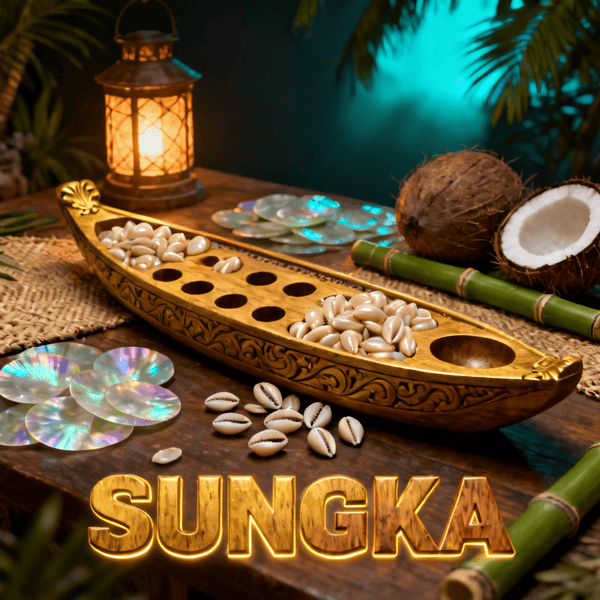
Ninety-eight - seven in each of the fourteen holes at the start. The two large end holes, the heads, begin empty and are where you bank the seeds you win.
Can you sow into your opponent's head in Sungka?
No. You pass their head by without dropping a seed in it, and drop into your own each time you pass. Every seed that reaches a head is banked and out of play for the rest of the game.
Which is better for beginners?
Kalah-style Mancala. Its turns are short and easy to visualise, so you learn the sowing idea quickly. Sungka's relay rule means a single move can cascade for a long time, which is exciting but hard to plan until the basic mechanic is second nature.

MAIN MENU
PvP Games
 Battleship
 Crazy Eights
 Dots & Boxes Blitz
 Gomoku
 Ludo
Ludo Quoridor
 Snakes & Ladders
 Yahtzee
Free Games
 Alquerque
 Backgammon
 Bagh-Chal
 Balut
Balut Battle for TokyoBattleship
 Bingo
Bingo Brick Breaker
 Bridge
 Bunco
Bunco Callbreak
 Checkers
 Chess
Chess ChompCrazy Eights
 Cribbage
 Dara
Dara Derby Dash
 DominoesDots & Boxes Blitz
 Durak
Durak Emberdeep
 Euchre
 Fanorona
 Farkle
 Fox and Geese
 Fox and Hounds
 Generala
 Gin Rummy
 Go / WeiqiGomoku
 Hazard
 Hearts
 Hex
Hex Higher or Lower
 Hnefatafl
 Hounds and Jackals
 Indian Rummy
 Jungle
 Ludus Latrunculorum
 Liar's DiceLudo
 Mahjong Solitaire
 Mancala
 Minesweeper
 Nim
Nim Nine Men's Morris
 Onitama
 Patolli
 Peg Solitaire
 Pentago
 Pente
Pente Pig
Pig PylosQuoridor
 Reversi
 Royal Game of Ur
 Scratch Cards
 Seega
Seega Senet
Senet Shax
Shax Ship, Captain, Crew
 Shut the Box
 Sixteen Soldiers
 SnakeSnakes & Ladders
 Klondike Solitaire
 Space Blaster
 Spades
 Sugar Pop
 Sungka
 Tangram
 Tile Rummy
 Tower
Tower Truco
Truco War
War Word Spy
 XII ScriptaYahtzee
NEED HELP?